
 Image 1 of 4
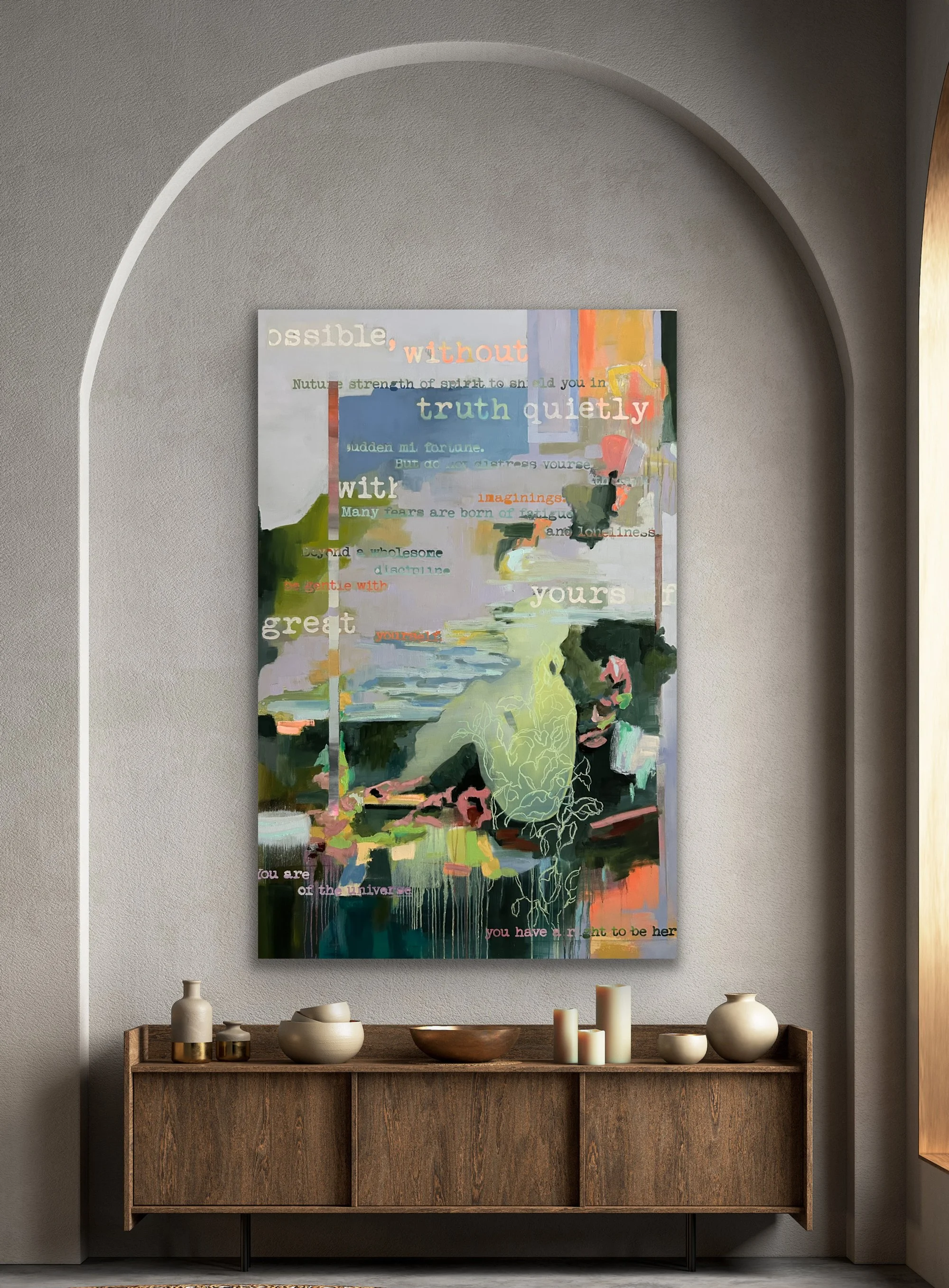 Image 2 of 4
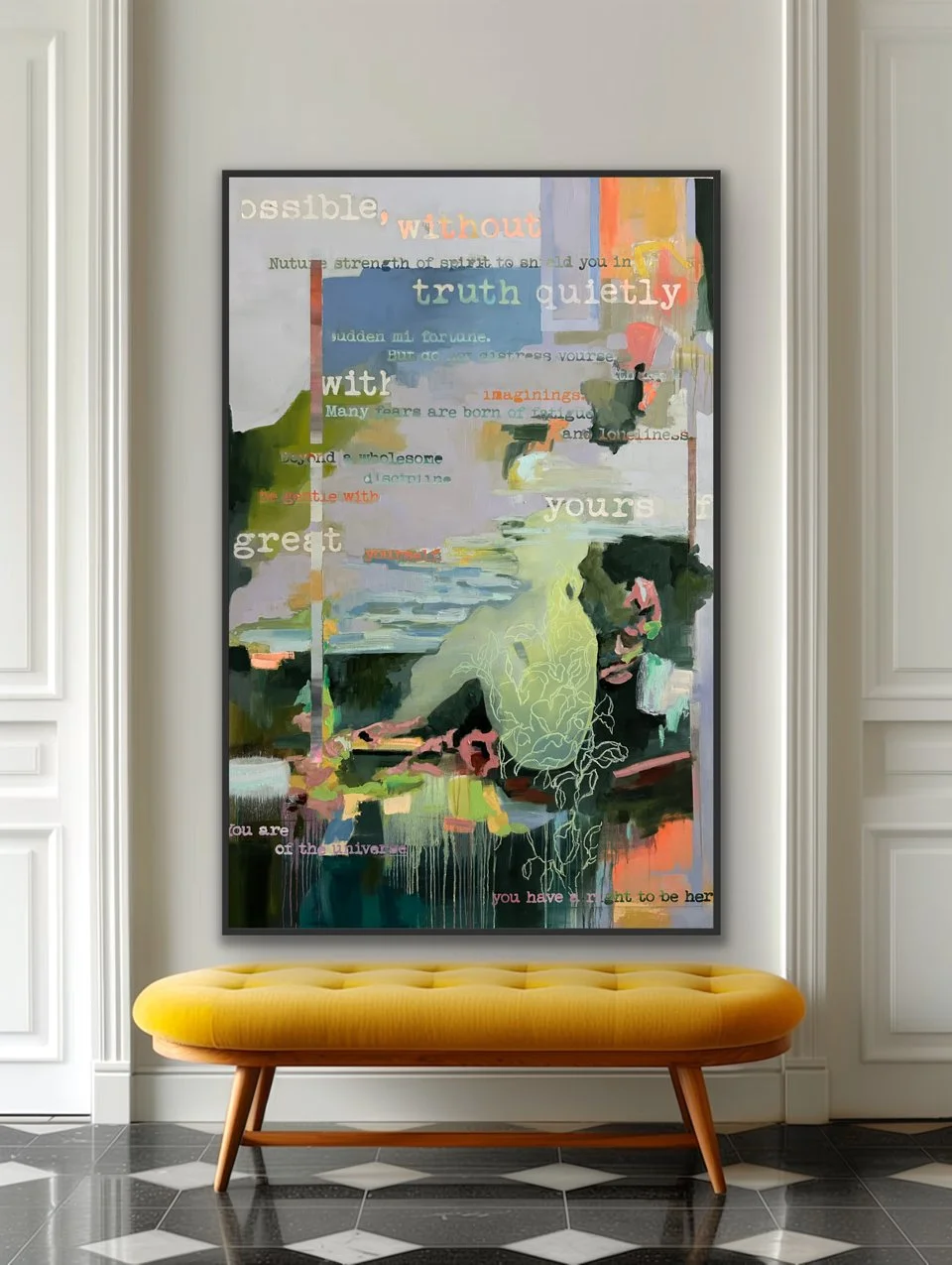 Image 3 of 4
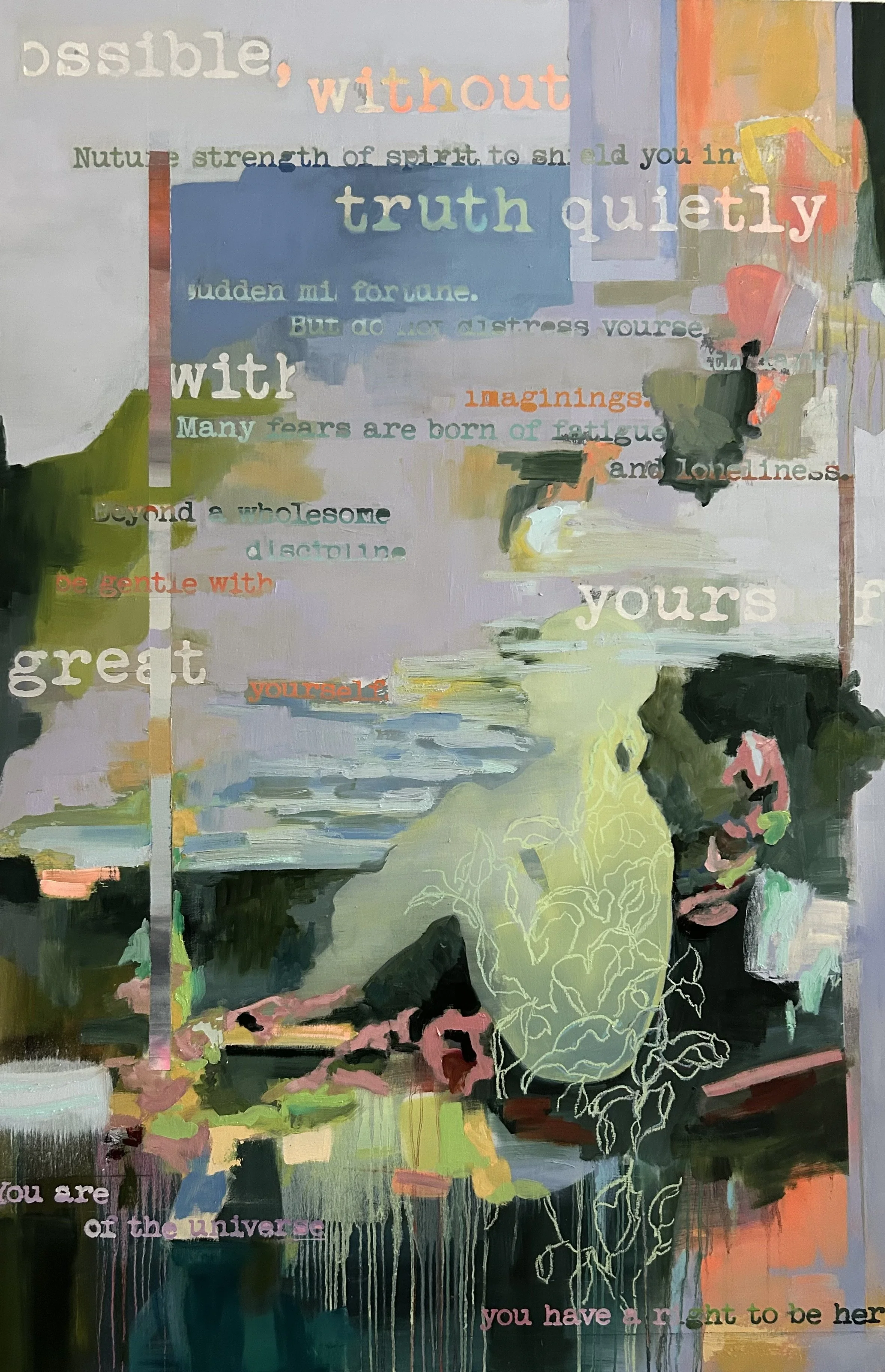 Image 4 of 4
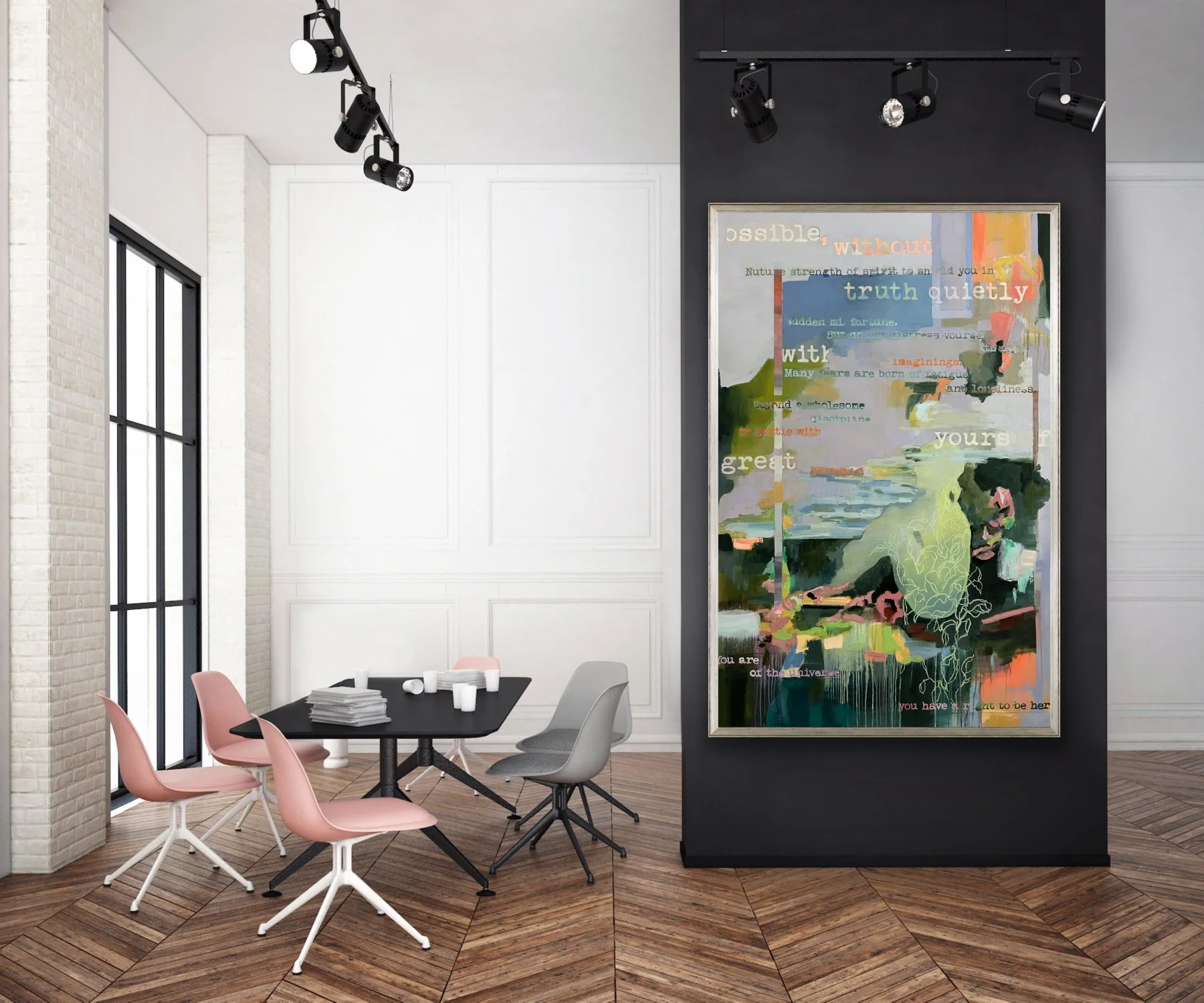
60” x 40” Oil on Canvas 2026
“In art, analog refers to works and processes grounded in physical materials and continuous, tactile engagement, where marks, tones, textures, and forms emerge through direct interaction rather than discrete digital steps. Analog art emphasizes material’s presence, process, and variability—paint absorbing into canvas, graphite responding to pressure, film responding to light so outcomes are shaped by gesture, time and chance. The term often carries a philosophical weight, suggesting slowness, embodiment, and sensory depth, in contrast to digital methods that rely on quantization, replication, and algorithmic control”.
— Courtesy of AI
“This work engages in a slowness of process that embodies the viewer in the direct experience of the painting in the present— requesting an interaction with the words and the meaning. I was considering the past ways of communication before computers involving a technology that, although mechanized, demanded the exact touch of a human hand. Fortunately, I have access to a typewriter from the 1940s thereabouts— the past. Like painting, it is analog and, to me, felt more real in the actual act of typing. In contrast this is not about nostalgia but a tracing of the steps of technology and its affect on humans and our understanding of the natural world (a concept that is analog in its essence) and the means to still bring that experience to the present moment that resides precariously in actual human touch. The words are meant to be disrupted leaving the viewer with a slower coming-to-their-generation by their own meaning. I am very much an intuitive artist who wants to follow the prompts that arrive through my conversation with my work and process. Chance is essential to me.
We exist in real time in relation to that which interacts with us, and we process that information through our minds, emotions, body— a constantly shifting continuum that denies a fixed point. A digital signal reduces any kind of recording of this human experience into two digits which could be seen as black and white, unrelenting. As such, it mimics the “real” world, unable to create or imagine, but extremely useful in gathering and rearranging that which only has been done before AND recorded in some way. It uses and mimics the analog world from the past— a very helpful tool when research is necessary. But what is removed by relying on the information gleaned through algorithms? It is the way of the present and the time to come— being human is relational in the moment”
~Wanda Ellerbeck
60” x 40” Oil on Canvas 2026
“In art, analog refers to works and processes grounded in physical materials and continuous, tactile engagement, where marks, tones, textures, and forms emerge through direct interaction rather than discrete digital steps. Analog art emphasizes material’s presence, process, and variability—paint absorbing into canvas, graphite responding to pressure, film responding to light so outcomes are shaped by gesture, time and chance. The term often carries a philosophical weight, suggesting slowness, embodiment, and sensory depth, in contrast to digital methods that rely on quantization, replication, and algorithmic control”.
— Courtesy of AI
“This work engages in a slowness of process that embodies the viewer in the direct experience of the painting in the present— requesting an interaction with the words and the meaning. I was considering the past ways of communication before computers involving a technology that, although mechanized, demanded the exact touch of a human hand. Fortunately, I have access to a typewriter from the 1940s thereabouts— the past. Like painting, it is analog and, to me, felt more real in the actual act of typing. In contrast this is not about nostalgia but a tracing of the steps of technology and its affect on humans and our understanding of the natural world (a concept that is analog in its essence) and the means to still bring that experience to the present moment that resides precariously in actual human touch. The words are meant to be disrupted leaving the viewer with a slower coming-to-their-generation by their own meaning. I am very much an intuitive artist who wants to follow the prompts that arrive through my conversation with my work and process. Chance is essential to me.
We exist in real time in relation to that which interacts with us, and we process that information through our minds, emotions, body— a constantly shifting continuum that denies a fixed point. A digital signal reduces any kind of recording of this human experience into two digits which could be seen as black and white, unrelenting. As such, it mimics the “real” world, unable to create or imagine, but extremely useful in gathering and rearranging that which only has been done before AND recorded in some way. It uses and mimics the analog world from the past— a very helpful tool when research is necessary. But what is removed by relying on the information gleaned through algorithms? It is the way of the present and the time to come— being human is relational in the moment”
~Wanda Ellerbeck